
Choosing a refrigerator is an important decision because it is one of the most frequently used appliances in a home. The right refrigerator should provide enough storage, fit your available space, use energy efficiently, and offer features that match the way you store and prepare food.
With so many sizes, styles, capacities, and features available, it can be difficult to know which refrigerator is right for you. This guide explains the main factors to consider before choosing a refrigerator for your home.
If you are also comparing other kitchen appliances, our guide to smart kitchen appliances can help you understand which modern features are actually worth considering.
How to Choose a Refrigerator for Your Home
Start by thinking about how you normally use your refrigerator. A refrigerator that works well for a small household may not provide enough storage for a larger family.
Consider how many people regularly use the refrigerator, how often you shop for groceries, and whether you usually store fresh food, frozen food, drinks, or prepared meals.
Your available kitchen space is equally important. Before choosing a model, measure the space where the refrigerator will be installed and make sure there is enough room for the doors to open comfortably.
What Refrigerator Size Do You Need?
Refrigerator size should be based on both your household needs and the space available in your kitchen.
A compact refrigerator may be suitable for a small household or limited kitchen space, while larger households may benefit from a full-size refrigerator with more fresh and frozen-food storage.
Measure Your Available Space
Measure the height, width, and depth of the space before buying. Also consider the space needed around the refrigerator for ventilation and the clearance required to open the doors.
Do not rely only on the refrigerator’s advertised dimensions. Check the manufacturer’s installation requirements because handles, hinges, doors, and ventilation areas can affect the actual space required.
How Much Refrigerator Capacity Do You Need?
Capacity is one of the most important factors when choosing a refrigerator. A larger capacity gives you more room, but choosing the largest model available is not always the best option.
Think about your normal grocery-shopping habits. If you buy groceries frequently and consume fresh food quickly, you may not need as much storage. If you shop less often or regularly store large amounts of food, additional capacity can be useful.
Also look at how the total capacity is divided between the refrigerator and freezer sections. A model with a large overall capacity may still have limited freezer space if you regularly store frozen food.
Which Refrigerator Type Is Best for You?
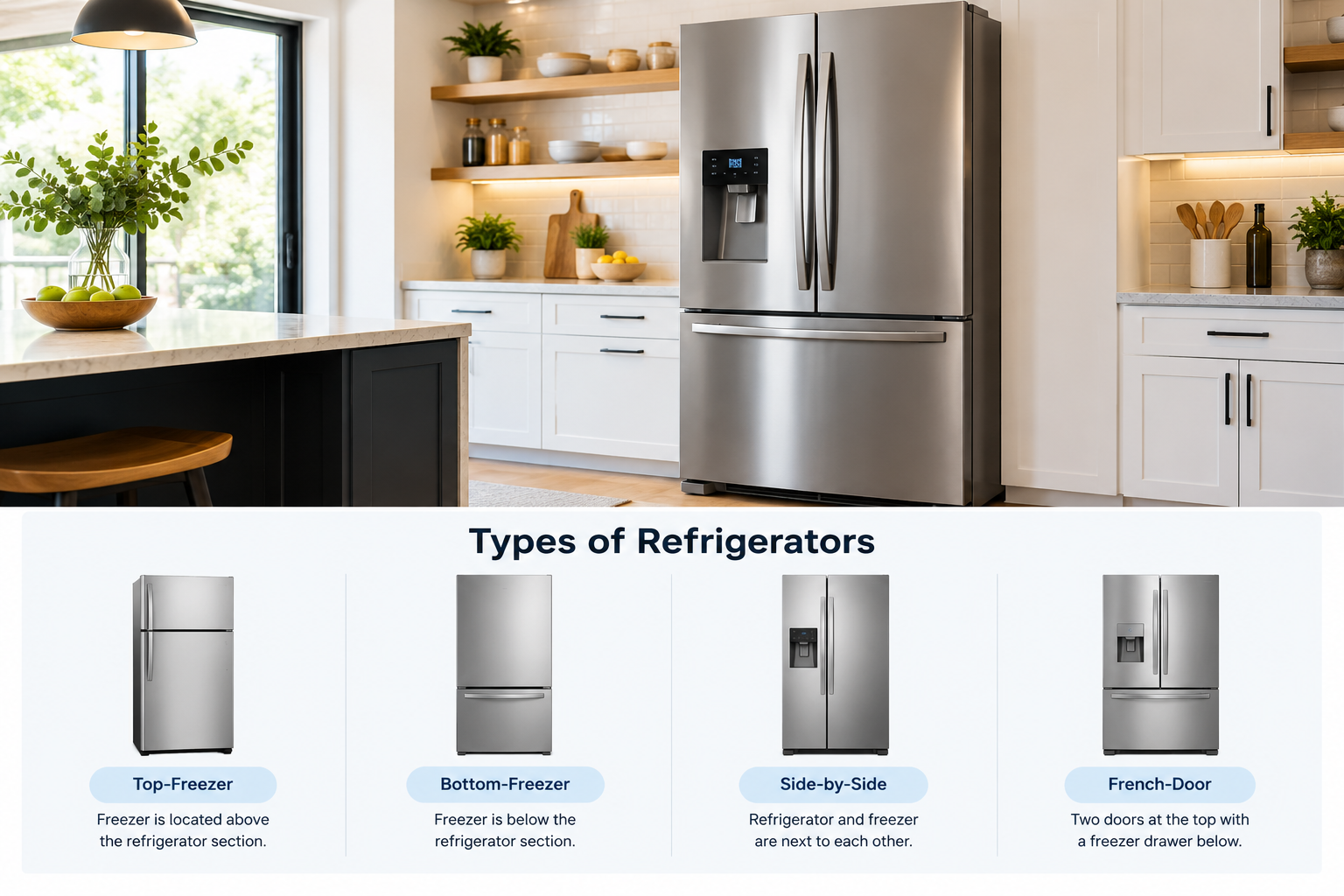
Refrigerators are available in several different designs. Each type offers a different balance of storage, accessibility, space requirements, and convenience.
Top-Freezer Refrigerator
A top-freezer refrigerator has the freezer compartment above the main refrigerator section. This traditional design is generally simple and practical, making it a popular choice for shoppers looking for straightforward storage.
Bottom-Freezer Refrigerator
A bottom-freezer refrigerator places the freezer below the refrigerator section. This design can make frequently used fresh food easier to reach without bending down as often.
Side-by-Side Refrigerator
A side-by-side refrigerator has separate refrigerator and freezer compartments positioned next to each other. It can provide convenient access to both sections and may work well in kitchens where door clearance is limited.
French-Door Refrigerator
A French-door refrigerator usually has two refrigerator doors at the top and a freezer drawer underneath. This design can provide a wide refrigerator compartment and flexible storage for larger food containers.
Are Energy-Efficient Refrigerators Worth It?
A refrigerator operates continuously, so energy efficiency is worth considering when comparing models. A more efficient refrigerator can help reduce electricity consumption over its lifetime.
Check the product’s energy information rather than assuming that a larger or more expensive refrigerator will automatically be more efficient.
Compare refrigerators with similar capacities and features to get a more meaningful idea of their energy performance.
You can also compare energy-efficient refrigerator models and buying guidance through ENERGY STAR’s refrigerator guide.
What Refrigerator Features Are Worth Having?
Modern refrigerators can include many additional features, but not every feature is necessary for every household.
Useful features may include adjustable shelves, flexible door storage, humidity-controlled drawers, separate temperature controls, interior lighting, and convenient freezer organization.
Some models also include water dispensers, ice makers, digital temperature controls, or smart connectivity. These features can add convenience, but they may also increase the purchase price and introduce additional components that can require maintenance.
How Important Is Refrigerator Storage Organization?
Two refrigerators with similar capacities can feel very different to use because of their internal layouts.
Look at the arrangement of shelves, drawers, door bins, and freezer compartments. Adjustable shelves can be particularly useful if you regularly store tall bottles, large containers, or different types of food.
Think about how easily you can see and reach the food inside. Good organization can make everyday use more convenient and reduce wasted storage space.
Proper refrigerator temperature is also important for food safety. The FDA’s food-storage guidance explains recommended refrigerator and freezer temperatures and safe food-storage practices.
What Should You Check Before Buying a Refrigerator?
Before making a final decision, compare the refrigerator’s dimensions, capacity, energy efficiency, storage layout, features, warranty, and installation requirements.
Pay attention to the direction in which the doors open and whether the refrigerator can be moved through your home’s entrances, hallways, and doorways. A refrigerator that fits the kitchen space may still be difficult to deliver or install if access is limited.
It is also worth checking the manufacturer’s warranty and the availability of service and replacement parts in your area.
How Much Should You Spend on a Refrigerator?
The most expensive refrigerator is not necessarily the best choice. A better approach is to decide which features and capacity you actually need and then compare models within a suitable budget.
Higher-priced models may offer larger capacities, premium finishes, advanced cooling systems, additional storage options, or smart features. However, paying more only makes sense when those improvements are useful to you.
Consider the total value of the refrigerator rather than focusing only on its purchase price. Energy use, warranty coverage, durability, maintenance, and useful features can all affect the long-term value.
Refrigerator Buying Checklist
Before buying a refrigerator, make sure you have checked the following:
- Measure the available kitchen space.
- Check the refrigerator’s height, width, and depth.
- Choose a capacity that matches your household needs.
- Compare refrigerator types and storage layouts.
- Check energy-efficiency information.
- Consider only the features you are likely to use.
- Check door-opening and installation requirements.
- Review warranty and local service availability.
- Compare the overall value rather than only the purchase price.
How to Choose the Right Refrigerator
The right refrigerator should fit your kitchen, provide enough storage for your household, and offer features that make everyday use easier.
Start with the available space and required capacity, then compare refrigerator types, storage layouts, energy efficiency, useful features, warranty coverage, and price. This approach can help you avoid paying for features you do not need while making sure the refrigerator meets your actual requirements.