
Using a coffee maker is straightforward, but small differences in coffee-to-water ratio, grind size, water quality, and cleaning can noticeably affect the final cup. Whether you are using a basic drip coffee maker or a more advanced machine, understanding the essential steps helps you get better and more consistent results.
This guide explains how to use a coffee maker correctly, how much coffee to use, and how to keep your machine clean.
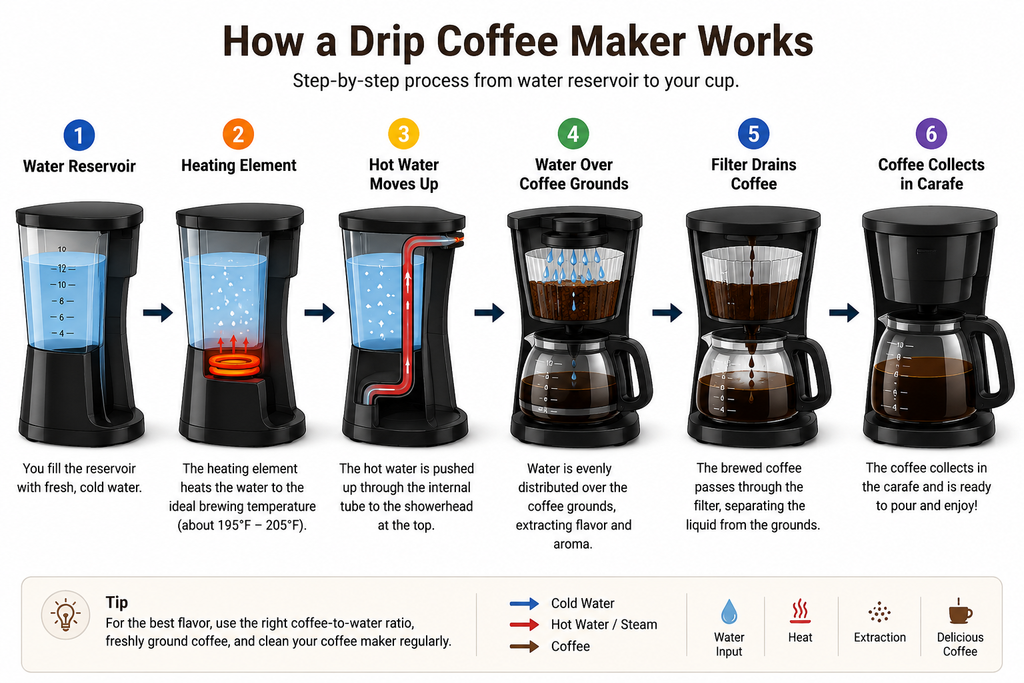
How to Use a Coffee Maker
Most drip coffee makers follow the same basic process:
- Fill the water reservoir with fresh, preferably filtered water.
- Add the correct amount of ground coffee to the filter.
- Place the filter correctly in the filter basket.
- Make sure the carafe is properly positioned.
- Turn on the coffee maker.
- Wait until the brewing cycle is complete.
- Pour the coffee and enjoy it while it is fresh.
The exact controls may differ between models, so check your machine’s instructions if it has special settings or functions.
How Much Coffee Should You Put in a Coffee Maker?
The amount of coffee depends on how much water you are brewing and how strong you prefer your coffee.
A useful starting point is about 1–2 tablespoons of ground coffee for every 6 ounces (180 ml) of water. You can adjust this ratio according to taste.
For example:
- 2 cups of water: about 2–4 tablespoons of coffee
- 4 cups of water: about 4–8 tablespoons
- 6 cups of water: about 6–12 tablespoons
- 8 cups of water: about 8–16 tablespoons
Keep in mind that coffee-maker “cups” are often smaller than a standard drinking cup. Check the markings on your machine’s water reservoir rather than assuming one machine cup equals 8 ounces.
What Type of Coffee Should You Use in a Coffee Maker?
For a standard drip coffee maker, medium-ground coffee is generally a good starting point.
The grind should not be extremely fine because very fine coffee can slow the flow of water and produce a bitter or over-extracted taste. Coffee that is too coarse may produce a weak or under-extracted cup.
For the best results, use freshly roasted beans and grind them shortly before brewing if you have a grinder.
What Water Is Best for a Coffee Maker?
Water makes up most of your coffee, so its quality matters.
Fresh filtered water is usually a good choice. Avoid using water that has an unpleasant taste or strong odor because those characteristics can affect the coffee.
If your area has hard water, mineral buildup can also develop inside the coffee maker over time. Regular descaling becomes particularly important in that situation.
How Long Does a Coffee Maker Take to Brew?
A typical drip coffee maker can take several minutes to complete a full brewing cycle. The exact time depends on the amount of coffee being brewed and the machine’s design.
Avoid judging the coffee only by how quickly the machine finishes. Brewing temperature, water flow, grind size, and coffee quantity all affect the final result.
Why Does My Coffee Taste Too Weak?
If your coffee tastes weak or watery, several things could be responsible.
Use More Coffee
Try increasing the amount of ground coffee slightly while keeping the amount of water the same.
Check the Grind Size
Coffee that is too coarse can produce a weak-tasting cup because water passes through the grounds too quickly.
Use Fresh Coffee
Old coffee loses aroma and flavor over time. Freshly ground beans generally produce a more flavorful cup.
Check the Coffee Maker
Mineral buildup or a clogged filter basket can affect water flow and brewing performance. Cleaning the machine may help.
Why Does My Coffee Taste Too Bitter?
Bitter coffee can result from over-extraction, excessively fine grounds, very hot brewing conditions, or using too much coffee.
Try using a slightly coarser grind or reducing the amount of coffee. Also make sure the machine is clean and operating normally.
How to Clean a Coffee Maker
Regular cleaning helps maintain the machine and can improve the taste of your coffee.
After each use:
- Remove and discard the used coffee grounds.
- Rinse the filter basket.
- Empty and rinse the carafe.
- Leave removable parts to dry properly.
For deeper cleaning, follow the manufacturer’s instructions. Some coffee makers have removable parts that can be washed separately, while others require a specific cleaning or descaling procedure.
How to Descale a Coffee Maker
Descaling removes mineral deposits that accumulate inside the machine.
The correct method depends on the manufacturer. Some machines are designed to work with a manufacturer’s descaling solution, while others may provide different instructions.
A typical descaling process involves running the recommended cleaning solution through the machine and then running fresh water through several cycles afterward. Always follow your coffee maker’s instructions, particularly if the manufacturer specifies a particular descaling product.
How Often Should You Clean a Coffee Maker?
There is no single cleaning schedule that works for every machine. How often you need to clean it depends on how frequently you use it, the type of water you use, and the manufacturer’s recommendations.
A practical routine is:
- After every use: Clean the coffee grounds and rinse removable parts.
- Regularly: Wash the carafe and filter basket thoroughly.
- When mineral buildup appears or according to the manual: Descale the machine.
- Whenever coffee develops an unusual taste: Clean and inspect the machine.
How to Make Better Coffee at Home
Good coffee does not necessarily require an expensive coffee maker. Consistency is often more important.
Focus on these factors:
- Use fresh coffee.
- Use an appropriate grind size.
- Measure coffee rather than guessing.
- Start with a sensible coffee-to-water ratio.
- Use good-quality water.
- Keep the coffee maker clean.
- Avoid leaving brewed coffee sitting on a hot plate for too long.
These simple habits can make a noticeable difference without requiring a complicated setup.
If you’re also comparing small kitchen appliances for your home, see our guide on what to check before buying a blender.
How to Choose a Coffee Maker That Fits Your Needs
If you are considering buying a coffee maker, start with your daily routine rather than simply choosing the machine with the most features.
Coffee makers are just one type of appliance worth considering when upgrading a kitchen. You can also explore our guide to smart kitchen appliances worth buying.
Think about how much coffee you normally make, whether you prefer single-serve or multiple cups, how much counter space you have, and how easy the machine is to clean and maintain.
A simple coffee maker that matches your routine can be more useful than an expensive model with features you rarely use. The best choice is the one that gives you the convenience, capacity, and brewing style you actually need.