
The kitchen is becoming one of the most interesting parts of the smart home. In 2026, kitchen appliances are moving beyond simple timers and preset programs, with newer products adding connected controls, food recognition, guided cooking, multi-functional designs, and AI-powered features.
But newer technology does not automatically mean better value. Some smart features can genuinely make cooking easier, while others may add cost without solving a real problem.
In this guide, we look at the best smart kitchen appliances worth considering, what makes them useful, and which features are actually worth paying for.
What Makes the Best Smart Kitchen Appliances Different?
The biggest change is the move from simple connected appliances toward products that can understand more about what you are cooking and help automate parts of the process.
At CES 2026, manufacturers showcased appliances using AI for food recognition, cooking assistance, inventory management, meal recommendations, and more. Samsung, for example, demonstrated AI-enabled refrigerators and ovens designed to provide a more connected cooking experience.
At the same time, multi-functional appliances are becoming more attractive because one device can replace several single-purpose appliances. This can be especially useful when counter-top and storage space are limited.
Smart countertop Ovens — Best for multifunctional Cooking
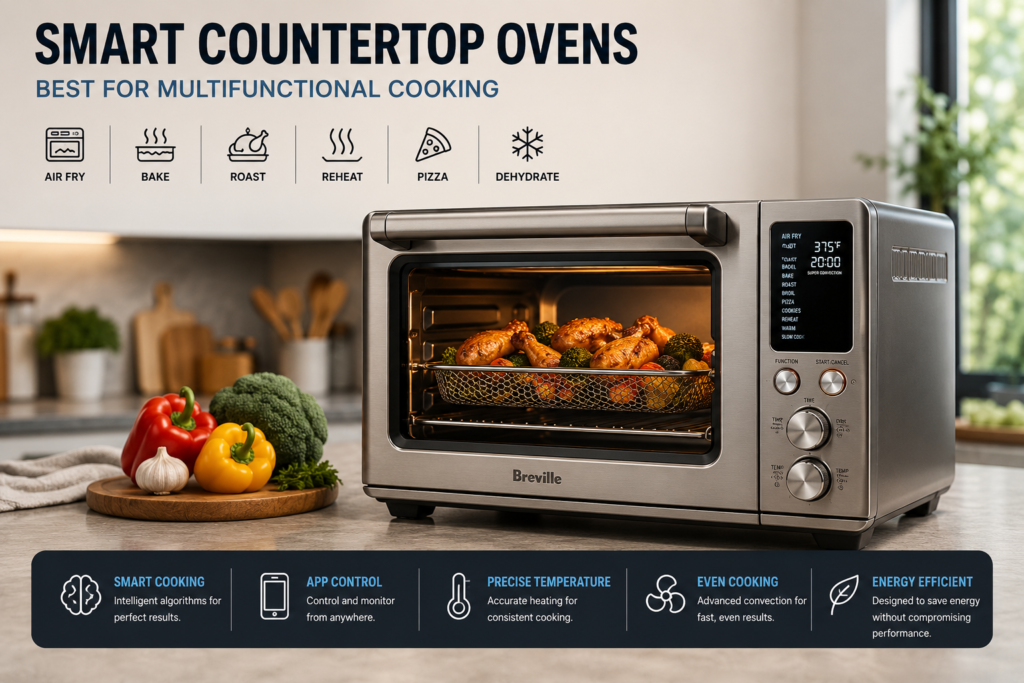
Smart counter-top ovens are among the most practical developments in modern kitchen appliances.
Instead of buying separate appliances for toasting, baking, roasting, reheating, and air frying, a multi-functional counter-top oven can combine several of these functions in one device.
The Breville Joule Oven Air Fryer Pro is an example of this approach. It combines multiple cooking functions with smart features designed to make cooking more convenient.
Another interesting option is the Anova Precision Oven 2.0, which takes a more advanced approach to controlled cooking and precision techniques.
What to Look For
- Number of cooking functions
- Interior capacity
- Temperature accuracy
- Cooking presets
- Smartphone connectivity
- Ease of cleaning
- counter-top footprint
A smart oven is most useful when you will actually use several of its functions. If you only need a basic toaster, paying extra for advanced smart features may not make sense.
AI Refrigerators — Best for Connected Food Management
Refrigerators are becoming much more than cold storage appliances.
Some of the newest models use cameras, displays, connectivity, and AI-assisted features to help users keep track of food and manage their kitchen.
Samsung showcased its Bespoke AI Refrigerator Family Hub and other AI-enabled refrigerator models at CES 2026. The company highlighted AI Vision features designed to recognize and track food items, while its newer systems can also provide food-related assistance.
These features can potentially help with tasks such as:
- Tracking food items
- Monitoring ingredients
- Managing grocery lists
- Suggesting recipes
- Checking refrigerator information remotely
However, smart refrigerators are expensive compared with conventional models, so these features should be considered conveniences rather than necessities.
Who Should Consider a Smart Refrigerator?
A smart refrigerator makes the most sense for people who already use smart-home technology and are likely to benefit from connected food management.
If you simply need reliable refrigeration, a conventional refrigerator with good energy efficiency and storage may still provide better value.
AI Cooking Systems — The Most Interesting New Category
One of the most interesting kitchen developments in 2026 is the emergence of appliances designed to automate more of the cooking process.
At CES 2026, the Wan AIChef Ultra attracted attention with its focus on AI-assisted cooking. The concept goes beyond simple remote control by attempting to provide more automated and personalized cooking assistance.
These systems are designed around the idea that the appliance can help with more than simply heating food. Depending on the product, the technology may assist with cooking programs, recipes, meal planning, or personalized preparation.
Are AI Cooking Appliances Worth It?
Not necessarily for everyone.
AI cooking technology is still developing, and some features may be more useful in theory than in everyday cooking.
Before paying a premium, ask whether the appliance actually saves you time or makes a cooking task easier.
AI should be treated as a useful feature, not a reason by itself to buy an appliance.
Smart Food Processors and Blender Systems — Best for multifunctional Preparation
Another important trend is combining food preparation functions into fewer appliances.
The vita mix Ascent X2 SmartPrep System, for example, combines blending and food-preparation capabilities in a single system.
This approach can be useful for people who regularly prepare:
- Smoothies
- Soups
- Sauces
- Dips
- Chopped vegetables
- Shredded ingredients
- Other prepared foods
The main advantage is not simply smart technology. It is the ability to reduce the number of separate appliances occupying your kitchen.
What to Check Before Buying
- Available attachments
- Container capacity
- Motor performance
- Storage requirements
- Cleaning process
- Replacement parts
- Warranty
Connected multicookers — Best for One-Pot Convenience
multi-cookers are not entirely new, but newer models continue to improve the idea of replacing several appliances with one machine.
The Instant Pot Pro is an example of a multi-functional cooker that can handle several cooking methods in one appliance.
Depending on the model, multi-cookers can provide functions such as:
- Pressure cooking
- Slow cooking
- Rice cooking
- sauteing
- Steaming
- Keeping food warm
The main benefit is convenience. Instead of using multiple pots and appliances, you can perform several cooking tasks with one machine.
However, check the exact functions of the model you are considering because features can vary between versions.
Smart Coffee Machines — Convenience With More Control
Coffee machines are also becoming more connected and versatile.
Modern premium machines can automate parts of the brewing process, while some multi-functional systems support different brewing methods or provide more control over preparation.
The appeal is particularly strong for people who make coffee every day and want consistent results without manually repeating every step.
What Matters More Than Smart Features?
For a coffee machine, the quality of the brewing system, grinder, temperature control, cleaning requirements, and availability of replacement parts can matter more than smartphone connectivity.
Don’t pay extra for an app if the machine itself doesn’t provide the coffee quality and convenience you want.
Smart Air Fryers — Useful, But Choose Carefully
Air fryers continue to evolve with connected controls, automatic programs, larger capacities, and multi-functional cooking modes.
Some newer products are designed to combine air frying with baking, roasting, dehydrating, and other functions.
Since we already have a separate air fryer buying guide on Buy Wanta, this article won’t repeat the same information.
Instead, when comparing a smart air fryer, pay attention to:
- Cooking capacity
- Temperature control
- Cooking presets
- Basket design
- Cleaning
- App functionality
- Noise
- counter-top space
Smart connectivity should be a bonus, not the main reason to buy the appliance.
Precision Cooking Appliances — For People Who Want More Control
Precision cooking is another area where technology can make a meaningful difference.
Products such as the Anova Precision Oven 2.0 focus on greater control over cooking conditions rather than simply providing more preset buttons.
This type of appliance can appeal to people who enjoy experimenting with cooking techniques and want more control over temperature and cooking conditions.
For a casual cook, however, a simpler appliance may be easier and more economical.
Do You Really Need an AI Kitchen Appliance?
This is probably the most important question to ask before buying one of the newest kitchen products.
AI can be useful when it helps an appliance recognize food, adjust cooking settings, manage ingredients, or provide useful guidance.
But some AI features are mainly designed to make an appliance sound more advanced.
Before buying, ask:
- Will this feature save me time?
- Will I use it regularly?
- Does it improve the actual cooking result?
- Does the appliance still work well without the smart features?
- Am I paying a large premium for technology I may rarely use?
If the answers aren’t convincing, a simpler appliance may be the smarter purchase.
Smart Kitchen Appliances vs Traditional Appliances
Smart appliances offer additional convenience, but traditional appliances still have important advantages.
A conventional appliance is often:
- Less expensive
- Simpler to operate
- Easier to troubleshoot
- Less dependent on software
- Less dependent on Wi-Fi or apps
A smart appliance may offer:
- Remote control
- Automated cooking programs
- Food recognition
- Recipe guidance
- Notifications
- Smart-home integration
The best choice depends on whether those additional features provide genuine value for your cooking habits.
What to Check Before Buying a Smart Kitchen Appliance
Before purchasing any connected kitchen appliance, look beyond the marketing claims.
Smart Features
Check exactly what the smart features do. An appliance with an app isn’t automatically a useful smart appliance.
Privacy and Connectivity
Some connected appliances may collect information or require an account and internet connection. Understand what connectivity is required before buying.
Cleaning and Maintenance
More technology does not necessarily make an appliance easier to clean. Check removable parts and maintenance requirements.
Replacement Parts
Check whether important accessories and replacement parts are available from the manufacturer.
Software Support
If an appliance depends heavily on an app or connected service, consider how important software support will be over the product’s expected lifetime.
Warranty
Always check the warranty and return policy before buying an expensive kitchen appliance.
Our Approach to Choosing Smart Kitchen Appliances
We evaluate products based on the information available from manufacturers, independent reviews, product specifications, features, usability considerations, and current market coverage.
We don’t claim to personally test a product unless we have actually tested it.
Our goal is to help readers understand which features are genuinely useful, which products are interesting, and where paying extra for smart technology may or may not make sense.
Final Thoughts
The best smart kitchen appliances in 2026 aren’t necessarily the products with the most AI features.
The most useful appliances are the ones that solve real problems while offering technology that genuinely improves the cooking experience.
Smart ovens can combine several cooking functions, connected refrigerators can help manage food, multi-functional systems can reduce counter-top clutter, and newer AI cooking products are beginning to automate parts of meal preparation.
But technology comes at a price. Before buying, compare the actual benefits with the cost and decide whether the smart features will become part of your everyday routine.
The smartest kitchen appliance isn’t the one with the most technology. It’s the one that makes your kitchen more useful without making your life more complicated.
Pingback: Best Air Fryers for Home Cooking: Essential Buying Guide
Pingback: Don’t Buy a Blender Until You Check These 10 Things
Pingback: How a Coffee Maker Works: A Simple Step-by-Step Guide
Pingback: How to Choose a Microwave Oven: Complete Buying Guide
Pingback: How to Choose a Refrigerator: Complete Buying Guide
Pingback: How to Choose a Washing Machine | Buy Wanta
Pingback: How to Choose the Right Dishwasher: A Complete Buying Guide | Buy Wanta